If artificial tears provide only short-term relief from burning, redness, or gritty eyes, the issue may be more than a lack of moisture. Dry eye often develops when the tear film is unstable and tears evaporate too quickly. For some patients, dry eye treatment may include intense pulsed light (IPL) therapy to address factors affecting tear quality.
Dry eye treatment begins with an evaluation of your symptoms and tear film. That helps determine whether IPL is an appropriate part of your care plan.
What is IPL therapy for dry eye?
IPL uses carefully controlled pulses of light applied to the skin around the eyes. It is used to support the function of the meibomian glands — tiny oil-producing glands along the eyelids.
These glands produce oils that form the outer layer of your tears. That oily layer slows tear evaporation and helps keep tears spread evenly across the eye’s surface. When the glands become blocked or are not producing enough oil, tears can evaporate too quickly, leading to dryness, irritation, fluctuating vision, and excessive watering.
IPL therapy may help improve meibomian gland function and reduce inflammation that contributes to dry eye symptoms.
What happens during IPL dry eye treatment?
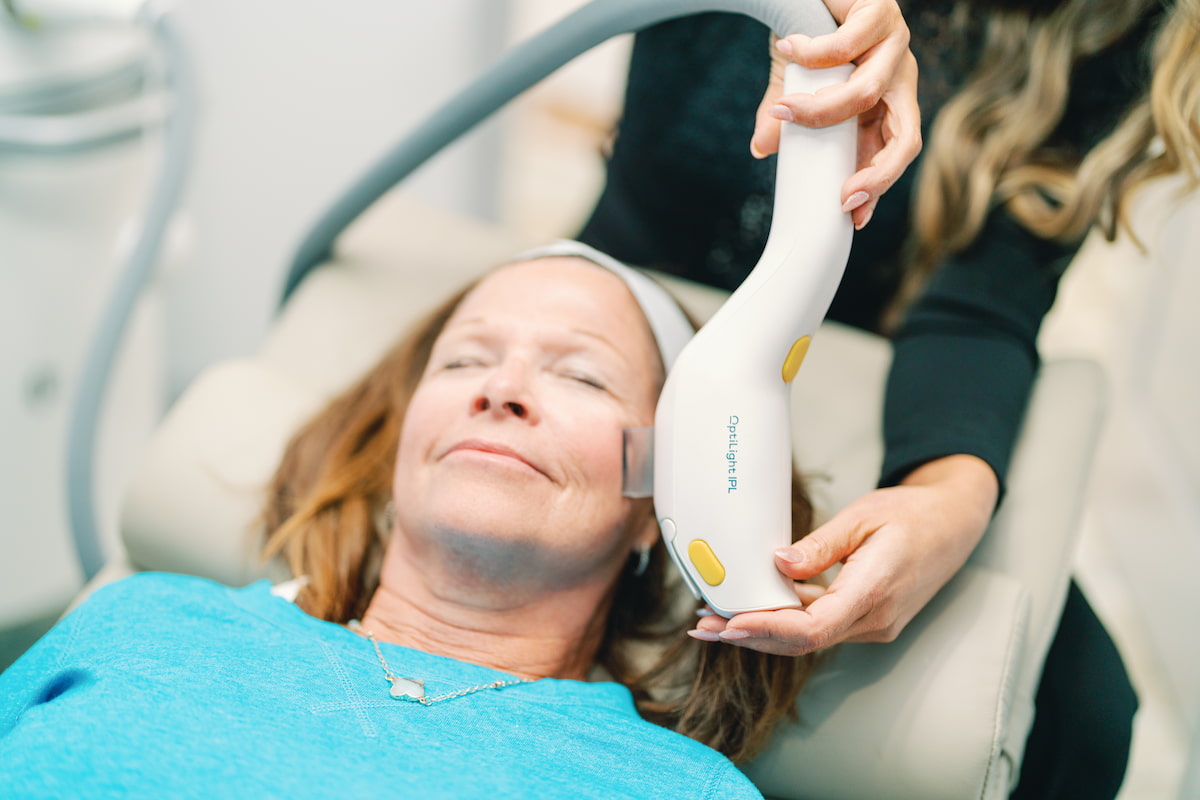
IPL is a non-surgical, in-office treatment. Before treatment, your eye doctor will evaluate your symptoms and eye health to make sure IPL fits your needs.
During the appointment:
- Protective shields are placed over your eyes
- A gel is applied to the treatment area
- Controlled pulses of light are delivered to the skin around the eyelids.
Your doctor may also recommend additional treatment steps based on the cause and severity of your dry eye.
The number and timing of sessions vary from person to person. Dry eye is often an ongoing condition, so your treatment plan may include IPL alongside other options, such as medicated eye drops, at-home eyelid care, or other therapies recommended during your exam.
Who may benefit from IPL therapy?
IPL may be considered for patients whose dry eye symptoms are related to meibomian gland dysfunction or tear evaporation. You may benefit from an evaluation if you experience:
- Burning, stinging, or a gritty feeling
- Red, irritated, or tired eyes
- Blurry vision that comes and goes
- Watery eyes despite feeling dry
- Discomfort during screen use
- Contact lens discomfort
- Symptoms that return quickly after using artificial tears
Not everyone with dry eye needs IPL. Your symptoms can have more than one cause, and the right treatment depends on what your eye doctor finds during your evaluation.
Take the next step toward more comfortable eyes
Persistent dry eye can make work, driving, reading, and screen time more difficult than they need to be. IPL therapy may offer another path to relief when poor tear quality is part of the problem.
Schedule a dry eye evaluation in Tazewell or Lebanon to find out what may be causing your symptoms and whether IPL therapy could be right for you.