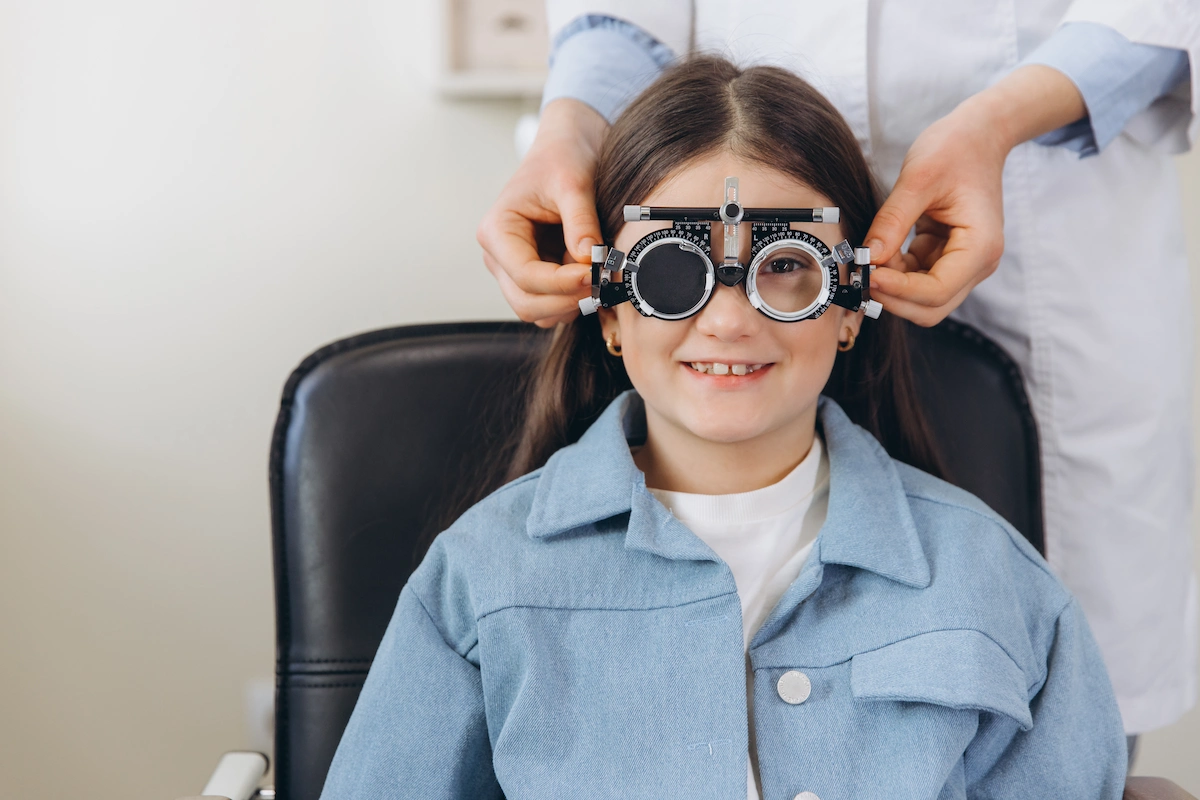
Children do not always realize their vision is different from other people’s. They may assume blurry vision, eye fatigue, or difficulty seeing the board is normal. A pediatric eye exam can assess how your child sees, how their eyes work together, and whether a vision issue may be affecting their comfort, learning, or everyday activities.
While a child may not complain about their eyes directly, certain habits and symptoms can signal that it is time to see an eye doctor.
What are common signs a child may need an eye exam?
Vision changes can look different from child to child. Some children avoid visually demanding activities, while others work harder to compensate for a problem they cannot describe.
Watch for signs such as:
- Squinting, blinking frequently, or rubbing their eyes
- Sitting very close to screens or holding books close to their face
- Losing their place while reading or avoiding reading altogether
- Covering or closing one eye
- Tilting their head to look at something
- Complaining of headaches, tired eyes, or blurry vision
- Struggling to see the board, signs, or objects in the distance
- Difficulty concentrating during schoolwork or other close-up tasks
These signs do not always mean your child has a vision problem, but an exam can help determine whether their eyes need support.
Why are regular eye exams important for children?
Clear vision plays an important role in how children read, learn, play, and interact with the world around them. School vision screenings can be useful, but they are not a replacement for a comprehensive eye exam. A screening may identify certain concerns, while an eye exam provides a closer look at vision, eye coordination, focusing ability, and eye health.
Regular exams can also help monitor for refractive errors, including nearsightedness. Nearsighted children may see close-up objects clearly but have trouble seeing far away. When myopia is identified early, myopia management may help slow its progression while supporting your child’s visual needs.
When should children have an eye exam?
A child should have an eye exam if you notice changes in their vision, behavior, or comfort. It is also a good idea to schedule regular eye care even when there are no obvious symptoms, since children can adapt to vision problems without saying anything.
Consider scheduling an appointment if your child:
- Has failed or had an inconclusive school vision screening
- Has a family history of childhood eye conditions or strong prescriptions
- Is having trouble with reading, schoolwork, or sports
- Is spending more time squinting or moving closer to see clearly
- Needs an updated prescription or has outgrown their current glasses
Help your child see with confidence
When a child needs vision correction, comfortable, properly fitted glasses can make a meaningful difference in their day. Eyeglasses for children can help provide the clear vision needed for school, activities, and everyday life.
An eye exam is a simple step toward protecting your child’s vision and helping them feel confident in the classroom and beyond. If you have noticed signs of eye strain, blurry vision, or changes in how your child sees, schedule a pediatric eye exam with our eye doctors in Lebanon.